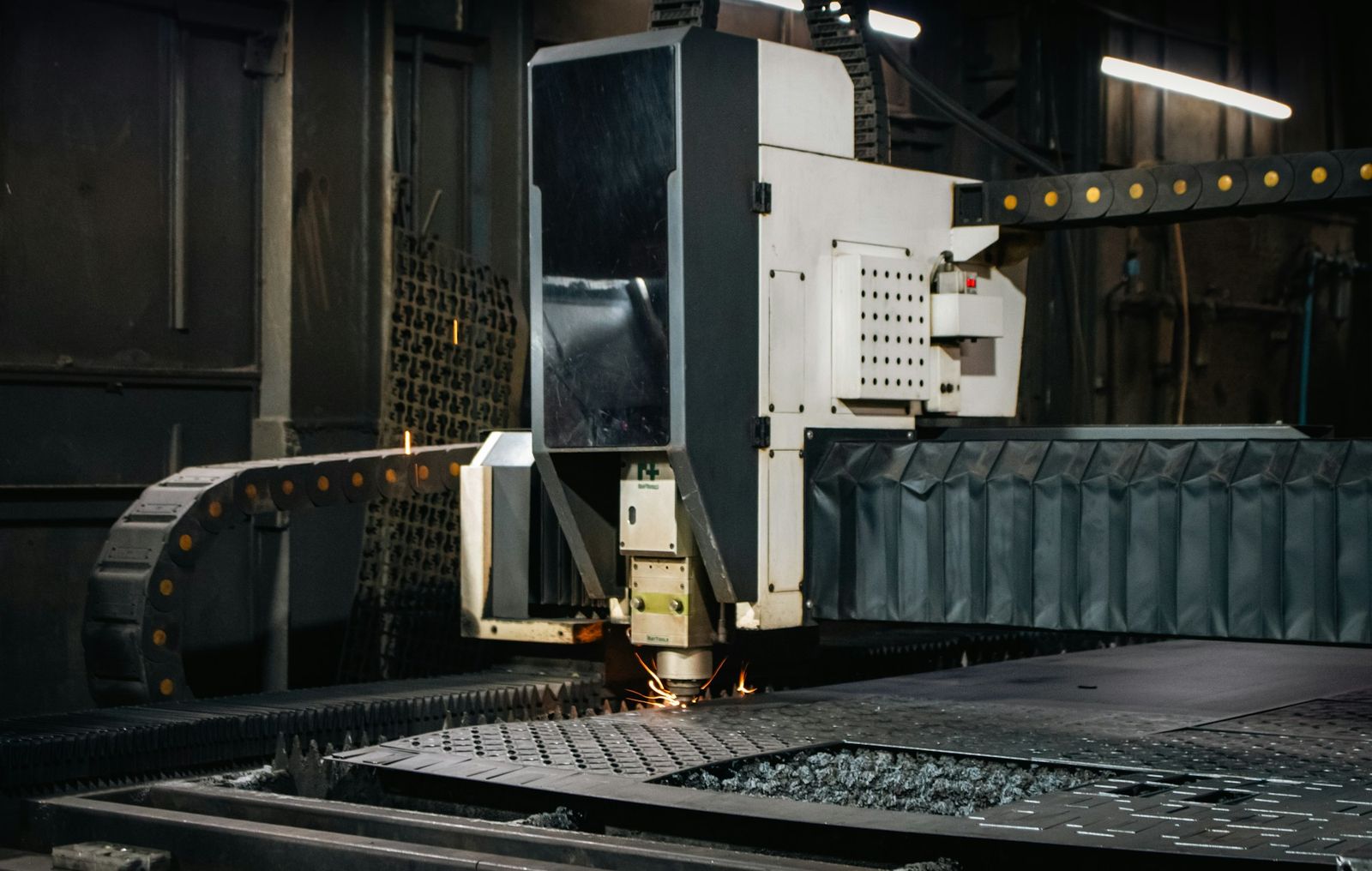
Industrial laser cutter working on a steel sheet in a manufacturing plant

Selling a manufacturing business in Ontario

Machine shops, fabricators, precision-component makers and equipment manufacturers. Buyers look hard at the earnings, the equipment, the customers and the people. Kingston Investments advises owners of privately held manufacturing businesses on valuation, buyer identification, negotiations and the sale process, across Ontario from the Greater Toronto Area.

Who it’s for
Owners of machine shops, CNC and fabrication businesses, and component and equipment manufacturers
Transaction focus
$500K–$30M
In our portfolio
20 industrial and manufacturing transactions

The short version

Most manufacturing businesses in our size range are valued on what they really earn, adjusted for the owner and for one-off items, and on how confident a buyer can be that those earnings will continue without you.

  • Buyers pay for dependable cash flow

    Not the profit on your tax return. They rebuild your earnings, then allow for what it costs to keep the equipment productive.

  • Concentration is the most common discount

    One customer, one key person or one critical machine carrying too much of the business makes buyers and lenders cautious.

  • Preparation changes the outcome

    A year or two to tidy the financials, document the equipment and build a second layer of management usually shows in the price and the terms.

  • You can sell quietly

    An anonymous profile, non-disclosure agreements, screened buyers and after-hours plant visits keep the process away from the shop floor until you decide otherwise.

What determines the value of a manufacturing business

Buyers of machine shops and manufacturers ask about the same handful of things. Each one either supports the price or gives a buyer a reason to lower it, add conditions or ask you to carry more of the risk.

01

Normalized earnings

Buyers start with EBITDA, earnings before interest, taxes, depreciation and amortization, then adjust it. Owner pay is reset to what a manager would cost, and personal or one-time expenses are added back. The result, adjusted EBITDA, is the figure most offers are built on.

Buyers like to see three years of reliable statements and a clear, documented list of every adjustment.

02

Customer concentration

If one customer or one industry accounts for a large share of sales, a buyer will ask what happens if that customer leaves, re-sources the work or pushes down prices. Long relationships, written supply agreements and approved-supplier status all help.

Buyers like to see sales by customer over several years, with tenure and any contracts or programs.

03

Machinery and equipment

Age, condition, capability and how busy each machine is. Lenders financing a buyer often commission an equipment appraisal, and the result can affect how much they will lend, which in turn affects what a buyer can pay.

Buyers like to see a current equipment list with age, condition, utilization and maintenance records.

04

Capital expenditure

Buyers separate the spending needed to keep the plant running from spending that grows it. Machines that are overdue for replacement are a cost the buyer will inherit, and it usually comes off the price, directly or through the terms.

Buyers like to see capital spending history and a realistic replacement plan for the next few years.

05

Working capital and inventory

Raw materials, work in progress, finished goods and receivables tie up cash. The purchase agreement normally sets a target level of working capital to be left in the business at closing, so how it is measured matters to what you receive.

Buyers like to see reliable inventory counts, costing and monthly working capital history.

06

Management and owner dependency

Who quotes the work, programs the machines, solves the problems and manages the key customers? If the answer is mostly you, a buyer will either pay less, keep you longer or tie part of the price to results after closing.

Buyers like to see a capable production manager, estimator or sales lead who could run the day-to-day without you.

07

Skilled people

Experienced machinists, programmers, welders and supervisors are hard to hire. Buyers look at tenure, turnover, wage levels compared with the market, and whether key people are likely to stay.

Buyers like to see a stable team, documented processes and cross-training on critical work.

08

Quality systems and certifications

Certifications such as ISO 9001, AS9100 for aerospace or IATF 16949 for automotive, and Canadian Welding Bureau certification for welding fabricators, can keep you on approved-supplier lists. Some customer approvals may need to be confirmed after a change of ownership.

Buyers like to see current certifications, audit results and rework and return rates.

09

Real estate and environmental

If you own the building, it can be sold with the business, separately, or kept and leased to the buyer. Lenders often ask for an environmental site assessment on industrial property, and any findings can affect timing and terms.

Buyers like to see a clear plan for the property and any previous environmental reports.

From reported profit to what a buyer will pay for

A simplified, hypothetical example. Buyers rebuild earnings, then look at the investment the equipment needs. The second step is the one owners most often underestimate.

  1. Reported profit before tax$900K

    From the financial statements.

  2. Adjusted EBITDA$1.3M

    Interest, depreciation, owner pay above a market salary, and one-time costs added back.

  3. After normal reinvestment$1.05M

    Less about $250K a year to maintain and replace equipment. This is the cash flow a buyer can rely on.

The catch-up bill

If two key machines are overdue for replacement, a buyer may estimate a one-time cost of, say, $600K and take it off the price or ask for terms that protect them. Planned, steady reinvestment before a sale avoids handing the buyer that argument.

Hypothetical figures for illustration only. Every business, and every buyer’s analysis, is different.

Who buys manufacturing businesses

Different buyers value different things. Knowing who is likely to be interested shapes how the business is presented and which offers to take seriously.

BuyerUsually looking forWhat they may pay forWorth knowing
Strategic buyersCompetitors, larger manufacturers, customers or suppliers New capabilities, capacity, customers or a geographic foothold Synergies, such as combined purchasing, shared overhead or work they can bring in-house They know the industry, so due diligence can be detailed. Sensitive information needs careful staging.
Financial buyersPrivate equity, family offices and holding companies Stable earnings, a capable management team and room to grow, often as an add-on to a company they own Predictable cash flow, diversified customers and a team that stays Often ask the owner to stay for a transition, and sometimes to keep a minority stake.
Individual buyersExperienced managers and owner-operators A well-run business they can lead themselves Clean financials, solid equipment and a team they can rely on from day one Usually depend on bank financing, so lender requirements and seller financing often shape the deal.

Preparing a manufacturing business for sale

You don’t need all of this done before talking to an advisor. But the earlier you start, the more of it can be in place before a buyer asks.

Two to three years out

  • Move to reviewed or audited financial statements if yours are compiled only
  • Reduce reliance on your largest customer where you can
  • Develop a second layer of management: production, estimating, sales
  • Plan equipment replacement rather than deferring it
  • Separate personal expenses from the business

Twelve to eighteen months out

  • Build an equipment list with age, condition and maintenance history
  • Prepare normalized earnings with your advisor, with support for every adjustment
  • Collect customer and supplier agreements, leases and permits
  • Renew certifications and close out open quality or safety issues
  • Talk to your accountant about structure and tax, including the capital gains exemption

Before going to market

  • Agree a realistic value range and the terms that matter to you
  • Decide what to do with the real estate
  • Prepare the information package and a well-organized data room
  • Plan when and how key employees will be told
  • Keep running the business well: buyers watch current results closely

Curious what your shop might be worth?

Send us a few figures and an advisor will review them and get back to you. It’s confidential, and you don’t need to be ready to sell.

How Kingston sells a manufacturing business

Our job is to prepare the business properly, find the buyers who will value it most, protect your confidentiality and manage the process so you can keep running the company.

Sell-side advisory Our full process, step by step
  1. 1

    Review and normalize

    We go through three years of statements, adjust the earnings the way a buyer will, and review the equipment list, capital spending, customers and working capital.

  2. 2

    Value range and readiness

    We give you a realistic value range, the reasons behind it and anything worth fixing before going to market, so there are fewer surprises in due diligence.

  3. 3

    Confidential marketing

    We prepare an anonymous profile and a detailed information package, then approach strategic and financial buyers who fit, screening each one for capacity before anything identifying is shared.

  4. 4

    Meetings and plant tours

    Serious buyers meet you and see the plant, usually outside working hours, so employees and customers aren’t unsettled.

  5. 5

    Offers and terms

    We help you compare letters of intent on cash at closing, seller financing, earnouts, the working capital target and your role after the sale, not just the headline price.

  6. 6

    Due diligence to closing

    We manage the data room and buyer requests, and coordinate with your accountant, lawyer and the buyer’s lender, including equipment appraisals and environmental reviews.

Selected manufacturing transactions

Sell-side mandates and completed transactions from Kingston’s portfolio. To protect our clients, businesses and parties are not named.

Kingston team prepared strong financial normalization analyses and implemented an effective screening process for prospective buyers. We were pleased with the buyer they introduced, and confidentiality was maintained throughout the year-and-a-half process. Protecting the company’s confidentiality was extremely important to us.

Seller, precision machining company

Questions owners ask

Short answers to the questions we hear most often. Every business is different, so we’re happy to talk through yours.

All FAQs
How much is my manufacturing business worth?

It depends mainly on what the business really earns once the financial statements are adjusted, and on how confident a buyer can be that those earnings will continue. For most manufacturers in our size range, that means adjusted EBITDA (or seller’s discretionary earnings for smaller, owner-run shops), weighed against customer concentration, the condition of the equipment, the investment it will need, and how much the business depends on you.

A realistic answer is a range, not a single number. You can request a confidential valuation review and we’ll talk it through with you.

What multiple of EBITDA do manufacturing businesses sell for?

There isn’t one reliable industry multiple. Prices vary widely with size, niche, customer mix, growth, equipment, management depth and the buyers who are active at the time. Published ‘average multiples’ often mix very different businesses and deal structures, so we prefer to look at your own numbers and at the buyers who would realistically be interested.

How long does it take to sell a manufacturing company?

It varies with the size and complexity of the business, how prepared it is and the buyer’s financing. Preparation, marketing, negotiation, due diligence and closing together often take many months, and some sales take a year or more. Equipment appraisals, environmental reviews and lender approval can add time, which is one reason preparation pays off.

Should I sell the shares or the assets of my company?

Many sellers prefer a share sale because, if the company qualifies, the Lifetime Capital Gains Exemption can shelter a significant amount of capital gains (currently about $1.25 million per individual). Buyers often prefer to buy assets. In an asset sale, the buyer and seller can often jointly elect so that GST/HST isn’t charged on the transfer, if the conditions are met. The structure affects what you keep after tax, so we work alongside your accountant and lawyer on it.

Do I have to sell the building with the business?

No. If you own the building, it can be sold with the business, sold separately or kept and leased to the buyer. Each option affects the price, the buyer’s financing and your income after the sale. Lenders often ask for an environmental site assessment on industrial property, so it helps to know early what that might involve.

What happens to my employees after the sale?

Most buyers of a manufacturing business want the skilled team to stay, because machinists, programmers, welders and supervisors are hard to replace. In a share sale, employment generally continues with the company. In an asset sale, the buyer usually offers employment to the staff it wants to keep. We help you plan when and how to tell key people, and buyers often want those people engaged before closing.

Can I talk to a competitor about buying my business without exposing confidential information?

Yes, with care. Buyers first see an anonymous summary, sign a non-disclosure agreement and are screened before receiving detail. With competitors, the most sensitive information, such as customer names, pricing and margins by customer, is usually shared late in the process and sometimes only with a limited group of the buyer’s advisors.

Should I use a business broker or an M&A advisor to sell my manufacturing company?

A business broker typically lists a business and responds to the buyers who come forward, which suits many smaller, simpler sales. An M&A advisor, sometimes called a business sale advisor, prepares the business for a buyer’s scrutiny, normalizes the financial statements, approaches suitable buyers confidentially, negotiates price and terms, and manages due diligence through to closing. For a manufacturer with equipment, real estate, key customers and skilled staff, the preparation, buyer screening and negotiation an advisor provides usually matter.

Do I need to be ready to sell before I speak with Kingston?

No. Many owners talk to us two or three years before they plan to sell, to understand value and what buyers will focus on. That gives you time to work on the things that move the price, such as customer concentration, equipment planning and management depth.

What does Kingston actually do during the sale?

We adjust the financial statements so buyers see what the business really earns, help you set a realistic price range, prepare the confidential profile and information package, approach and screen strategic and financial buyers, arrange meetings and plant tours, help you compare offers on price and terms, and manage due diligence through to closing with your accountant and lawyer.

Confidential conversation

Thinking about selling your manufacturing business?

A first conversation is confidential and there’s no obligation. We’ll give you a realistic view of what the business might be worth, how buyers would see it and what to work on first.

Introductory call · 30 minutes

Book a confidential conversation

Choose a time that suits you. We’ll talk about your business, what you’re hoping to achieve and the options open to you. You don’t need to be ready to sell.

  • Confidential, with no obligation
  • Nothing to prepare in advance
  • Selling, buying, valuation or financing
Loading available times…

Having trouble? Open the scheduling page in a new tab